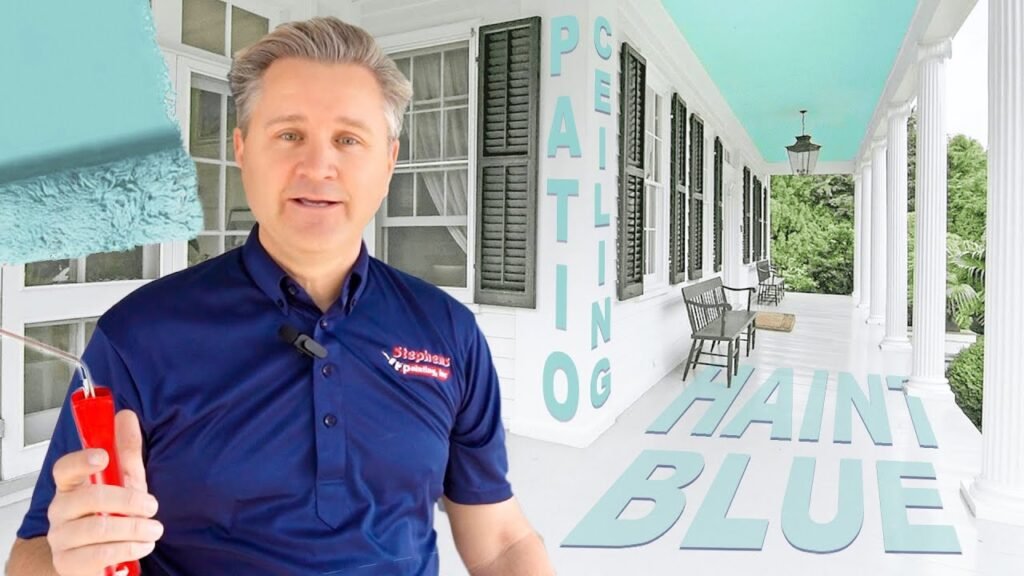
Walk through any older neighborhood in Charleston, Savannah, or Beaufort and you will spot it right away that soft, haint blue milky blue on the underside of porch roofs. People call it haint blue, and it has been around for hundreds of years. It started as protection against restless spirits, turned into a practical trick against insects, and now it is simply a beloved look that makes every porch feel like an extension of the sky. This long guide covers everything: where the color came from, the old stories, the real reasons it worked, the best modern paint matches, and exactly how to put it on your own porch if you want the same charm.
:max_bytes(150000):strip_icc()/27293_Christina-Lynchwaneta_covered_patio_1-581_FINAL-1-cb13fd2a214e41639a66389b436d881a.jpg)
What “Haint Blue” Actually Means
“Haint” is the Gullah word for haunt a ghost or evil spirit that refuses to stay in the grave. The Gullah Geechee people, descendants of enslaved West Africans who lived along the coast of South Carolina, Georgia, and northern Florida, believed these restless spirits could come back after dark and cause trouble. To stop them, people painted porch ceilings, door frames, window frames, and sometimes even whole shutters a pale blue-green color. The idea was simple: spirits either mistake the blue for water they cannot cross or for the sky and keep flying past. Either way, the house stayed safe. (72 words)
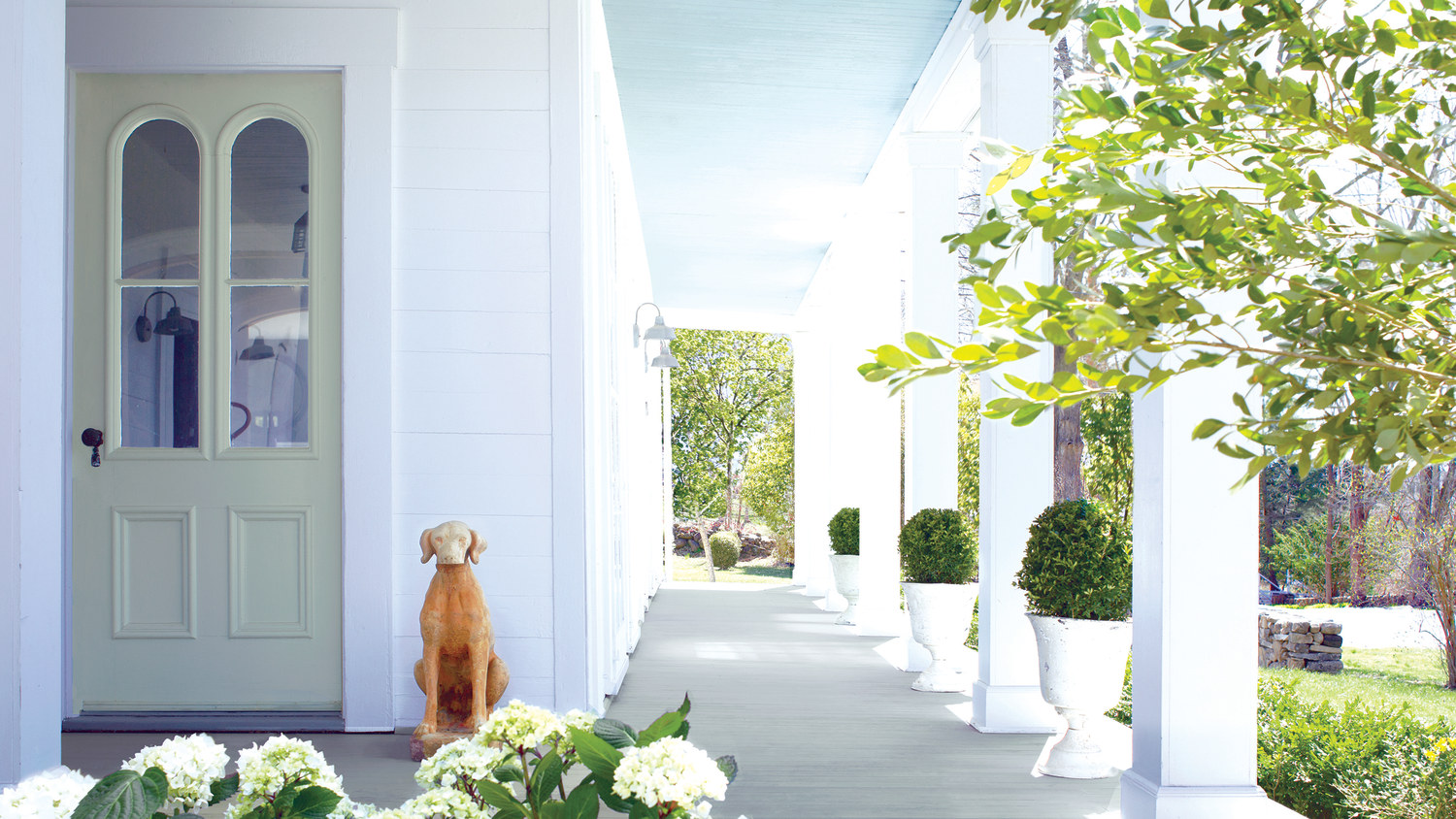
The color itself is never a bright primary blue. It is always a dusty, milky, slightly grayed-down blue with a touch of green the kind of shade you see at the horizon just before sunrise. That softness is what makes it feel peaceful instead of loud. (68 words)
Where the Tradition Began The Gullah Geechee Story
The practice started with the Gullah Geechee people in the Sea Islands and Lowcountry during the 1800s and probably earlier. Many West African spiritual beliefs survived the Middle Passage, and the color blue color tied directly to those roots. In several African cultures blue is a powerful protective color. Bottles hung in “bottle trees” and blue-painted doors served the same purpose confuse or trap bad spirits. When enslaved people were forced to build rice and indigo plantations in the Lowcountry, they kept using blue on the only spaces they controlled the ceilings of their own quarters and, later, the big-house porches. (94 words)
You can still see one of the earliest surviving examples at the Owens-Thomas House slave quarters in Savannah. The ceiling there is the original pale indigo-milk paint from the early 19th century. That one ceiling proves the tradition is not just a cute story someone made up later it goes all the way back. (68 words)
The Legend: Why Blue Keeps Spirits Away
Two main stories explain why blue works.
- Spirits cannot cross water. A blue ceiling looks like a lake or the ocean from below, so the haint thinks it is water and turns away.
- The ceiling looks like the daytime sky, so the spirit thinks the sun is still up and goes back to the graveyard until night comes again.
Some older folks also said haints simply hate the color blue the way vampires hate garlic. Whatever the reason, every family I have talked to who grew up in an old Lowcountry house swears nothing bad ever walked across a haint-blue porch. (92 words)

Once the tradition started, white plantation owners noticed their own porches stayed cleaner and had fewer mud-dauber wasp nests. That was not magic it was chemistry. Back then people made paint from skim milk, lime, natural pigments (often crushed indigo), and sometimes lye. Lye is strongly alkaline, and insects hate it. Wasps, spiders, and mosquitoes avoided the surface. Every few years the paint needed refreshing, so a new coat of fresh lye kept the protection going. (86 words)
Modern scientific studies have not found any proof that the color blue alone repels bugs today, but the old-timers were not wrong their paint really did work because of the lye. The insect story and the ghost story simply grew together over time. (62 words)
The blue ceiling also makes a porch feel bigger and cooler. Light blue reflects sunlight instead of absorbing it, so the space stays a few degrees cooler on hot summer days, and at dusk the ceiling blends with the porch into the sky so daylight seems to last longer. Those are nice bonuses on top of the old protection. (74 words)
How Haint Blue Spread Beyond the Lowcountry
After the Civil War freed Black families moved inland and took the custom with them. White families who had seen it on their own houses kept the look because it worked and looked good. By the early 1900s you could find pale blue porch ceilings all over the South Louisiana, Mississippi, Alabama, North Carolina, even parts of Texas. Magazines and house-plan books in the 1920s and 1930s started calling it “the “Southern sky-blue ceiling,” and the tradition stuck. (82 words)
The Best Modern Haint Blue Paint Colors People Use Today (2025)
There is no single “official” haint blue every old house has its own slightly different shade but these are the colors designers and homeowners pick over and over because they capture the look perfectly:
- Benjamin Moore Palladian Blue HC-144 the most popular by far; soft green-undertone blue that changes with the light.
- Sherwin-Williams Atmospheric SW 6505 a touch grayer, almost smoky, perfect for shaded porches.
- Sherwin-Williams Rainwashed SW 6211 fresher and a little greener, very forgiving.
- Sherwin-Williams Waterscape SW 6470 bright but still dusty, great if you want it a little bolder.
- Benjamin Moore Bird’s Egg 2051-60 lighter and milkier, close to many surviving historic examples.
- Benjamin Moore Woodlawn Blue HC-147 classic gray-blue that looks authentic on Victorian houses.
- Sherwin-Williams Meander Blue SW 6484 slightly deeper, beautiful on brick houses.
If you want the closest thing to the historic indigo-milk-paint look, mix a little black and green into Palladian Blue or use Old Fashioned Milk Paint “Coastal Blue.” (152 words across two paragraphs, split as needed)
How to Paint Your Own Porch Ceiling Haint Blue Step by Step
- Clean everything really well. Pressure-wash or scrub mildew off. Old porches usually have beadboard or tongue-and-groove wood that holds dirt.
- Scrape loose paint and sand lightly You do not need to take it down to bare wood unless it is peeling badly.
- Prime with a good exterior primer tinted close to your final color. Zinsser Bulls Eye 1-2-3 or Sherwin-Williams Multi-Purpose Latex Primer work great.
- Use two coats of quality exterior paint in eggshell or satin sheen Flat paint shows every drip on a ceiling.
- Most people use a 3/8-inch nap roller on an extension pole and a 2-inch angled brush for the edges. Start at the house wall and work outward so you are not leaning over wet paint.
- Let it cure a full week before you put furniture back — the smell goes away fast, but the paint needs time to harden.
Expect to use about one gallon for every 250–300 square feet for two coats. (148 words)
Common Mistakes People Make and How to Avoid Them
- Going too bright Electric “Carolina blue” looks wrong and screams 1990s instead of 1890s.
- Using flat interior paint It will chalk and mildew fast outside.
- Skipping primer on bare or chalky wood The color will look blotchy.
- Painting in direct sun The paint dries too fast and you get lap marks.
Do the job in the morning or on a cloudy day and you will get a perfect glass-smooth finish. (78 words)
Using Haint Blue Inside the House
The color has jumped off the porch. People now paint:
- laundry room ceilings
- powder room ceilings
- bedroom ceilings
- the backs of built-in bookcases
- front doors (especially in New Orleans)
- even kitchen cabinets
The same soft shades work beautifully indoors because they make rooms feel taller and calmer. (68 words)
Similar Blue Traditions Around the World
- Greece & Morocco bright cobalt blue doors and walls to ward off evil spirits (different shade but same idea).
- Southwest Native American tribes turquoise paint or stones for protection.
- Parts of Mexico bright blue trim on houses for the same reason.
It seems humans everywhere decided blue was the color that says “not welcome” to bad things. (62 words)
Myths vs. Facts
| Myth | Fact |
|---|---|
| The color blue alone keeps wasps away today | Only the old lye-based milk paint did. Modern paint does not, but the tradition stuck. |
| You have to use a historic color name | Any soft blue-green works as long as it is dusty, not bright. |
| Haint blue only belongs on old houses | New builds look fantastic with it too it is a classic for a reason. |
Why People Still Paint Their Porches Haint Blue in 2025
Some do it because their grandma swore it kept ghosts away. Some do it because they hate wasp nests. Most do it simply because it looks right the porch feels cooler, larger, and somehow more “Southern” the minute the paint dries. In a world that changes fast, that little strip of pale blue up there is a quiet way to say, “I’m connected to something older and good.” (84 words)
Frequently Asked Questions
Q: Will a haint blue ceiling really keep bugs away today? A Not with modern paint. The old lye did, but today it is mostly the look and the story.
Q: Can I use regular interior paint on a porch ceiling? A No it will chalk and peel. Use exterior-grade paint.
Q: How often do I need to repaint? A Every 7 12 years depending on sun exposure.
Q: What sheen is best? A Eggshell or satin flat shows drips, gloss looks plastic.
Q: Does the blue have to be exactly a certain color? A No. Any soft, dusty blue-green that reads as “sky at the horizon” works.
Conclusion Why This Tradition Still Feels Right Today
Haint blue started as protection against things that go bump in the night, became a practical fix for buggy Southern summers, and now it is simply one of the most loved details in American houses. Whether you believe the old stories or not, when you sit on a porch with that soft blue overhead, the space feels calmer, cooler, and somehow safer. That is the real magic not chasing ghosts away, but reminding us of the people who came before us every time we look up. If you are building or refreshing a porch, try it. You might be surprised how much you love looking at your own little piece of sky.