The Charm of British Kitchen Nook Cozy Corners for Everyday Comfort
My nan had this little corner in her kitche two wooden benches a round table and a window that looked out onto the garden. Every Sunday morning that spot filled up fast. Someone always had tea someone always had toast and nobody really wanted to leave. That corner was not special because of how it looked. It was special because of what happened there. That is what a British kitchen nook does to a home. It pulls people in and keeps them there.
These tucked-away seating spots have been part of British kitchen life for longer than most people realize. They started as simple benches near the fire and slowly became something more intentional more personal. Today they show up in London flats countryside cottages and everything in between. And the reason they keep coming back is simple they work. They make a kitchen feel like more than a room where food gets made.
This guide covers everything from the history behind these spaces to practical advice on building one that actually suits your life. There are no cookie-cutter ideas here. Just real observations from real homes and honest suggestions that will help you figure out what works for your space.
What Is a British Kitchen Nook?
The Basic Idea Behind It
A kitchen nook is a small dedicated seating area built into or positioned within the kitchen itself. It usually has a table with benches or cushioned seats on either side. Some are built directly into corners. Others run along a single wall. The size varies but the purpose stays the same a spot for sitting that belongs specifically to the kitchen rather than a separate dining room.
What makes the British version distinct is the feeling it goes for. There is warmth to it. Natural wood soft fabric a window nearby if possible. Nothing polished or perfect. The goal is a place that feels used and loved not displayed and untouched.
What It Is Not
It is not a formal dining room. Nobody puts out the good china in a kitchen nook. It is the place where the school bag gets dumped where the coffee goes cold because someone started reading and forgot about it where the dog sneaks under the table hoping for crumbs. It is the informal heart of the kitchen and that informality is exactly what gives it its value.
Why These Spaces Suit British Homes So Well
British homes especially older ones tend to have kitchens with alcoves odd corners and spaces that were never quite planned for anything specific. A nook fits into those gaps naturally. It takes something unused and turns it into the spot everyone wants. British culture also has a long tradition of gathering in the kitchen rather than sitting formally in a dining room and the nook fits that habit perfectly.
A Short History of Kitchen Nooks in Britain
Where It All Started
Go back far enough in British history and the kitchen was not even a separate room. Medieval homes were mostly one space fire in the middle family around it food cooking nearby. The bench by the hearth was not designed as a nook. It was just where people sat because that was where the warmth was. But that idea of a fixed seat close to the cooking fire planted a seed that never fully went away.
As homes grew more structured over the following centuries the kitchen moved into its own room. But that corner bench stayed. You still find them in old farmhouses across Yorkshire and Devon worn smooth by generations of use fitted to the wall like they always belonged there.
The Victorian Kitchen and What Changed
Victorian Britain had strong opinions about how a house should be organized. Wealthier households had kitchens hidden below stairs separate from the family entirely. But working class and rural homes kept that kitchen-centered life. The settle a high-backed wooden bench was common in cottage kitchens throughout this period. It blocked draughts gave people a proper seat near the warmth and stored things underneath. Practical through and through.
The 1920s and the Built-In Breakfast Nook
After the First World War Britain was building smaller homes for more people. Space had to work harder. Around this time the idea of a purpose-built breakfast nook came over from America where it had already caught on in bungalow-style homes. British builders liked it because it solved a real problem how do you seat a family in a small kitchen without a separate dining room taking up precious square footage?
The answer was to build the seating into the walls. Fixed benches matched the kitchen woodwork the table slotted in between and suddenly you had seating for four or five people in a space that would otherwise have held nothing useful. The Arts and Crafts movement was popular at the time and its values honest materials handmade quality natural finishes shaped how these nooks looked and felt.
Post-War Updates and the 1950s Nook
After the Second World War British kitchens went through a period of cheerful reinvention. Bright fabrics Formica surfaces and bold colours replaced the darker more serious tones of earlier decades. Kitchen nooks got cushier literally. Upholstered banquettes in yellow or red vinyl appeared in many suburban homes. The nook became a family space associated with modern optimism rather than old-fashioned necessity.
The Country Kitchen Revival
By the 1980s British design magazines had fallen back in love with the traditional kitchen. The country kitchen look hand-painted cabinets flagstone floors an Aga in the corner became aspirational. Kitchen nooks came with it. They featured heavily in features about English heritage and home comfort. Oak benches floral cushions and a scrubbed pine table became the definitive image of the British kitchen nook and that image still resonates today.
Key Design Elements of a Traditional British Kitchen
Natural Materials Are Non-Negotiable
If there is one rule that runs through traditional British kitchen design it is this use real materials. Oak walnut pine and stone are the backbone of the style. These are not chosen for show. They are chosen because they last they improve with age and they feel good to be around. A cabinet door in solid oak and a cabinet door in MDF do not feel the same when you close them. That difference matters in a space you use every day.
The Painted Cabinet Tradition
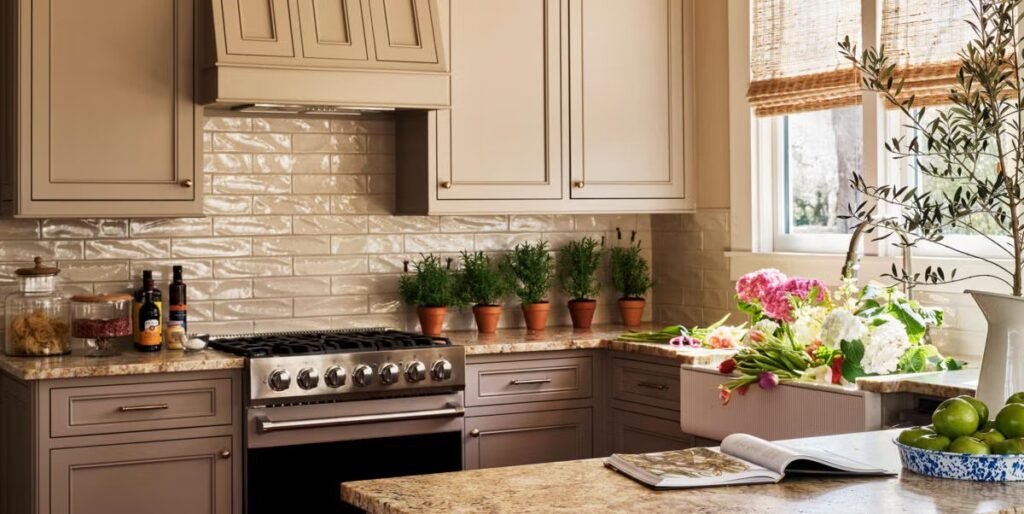
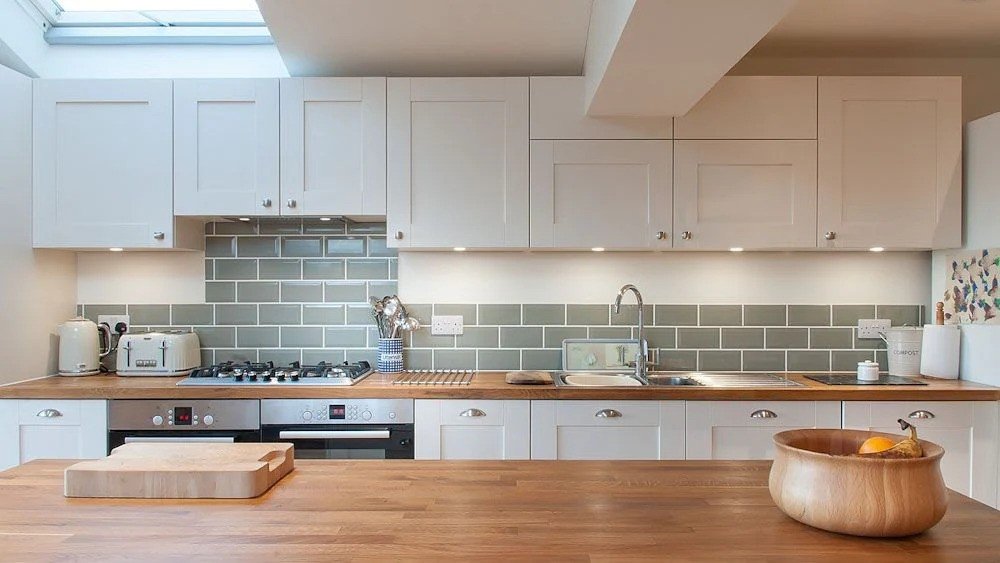
British kitchens do not tend to favour high gloss or stark white cabinetry. The preferred approach is hand-painted in soft tones sage green dusty blue warm cream slate grey. These colours have roots in old English farmhouse design and they work because they feel calm and settled rather than sharp and clinical. When the nook seating or the wall behind it shares one of these tones everything in the kitchen feels connected.
Brass and Aged Metal Details
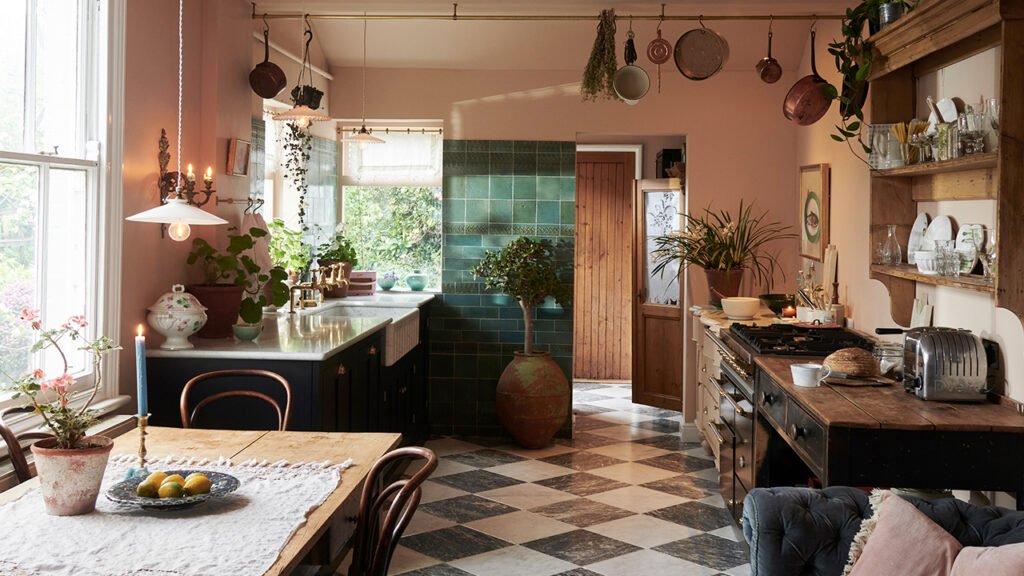
Look around a well-designed British kitchen and you will spot brass. Taps handles cabinet hinges light fittings aged brass or unlacquered brass that will develop a natural patina over time. It is a warm metal that suits wood and stone far better than chrome. In a kitchen nook a single brass pendant light can pull the whole look together with very little effort.
Open Shelves and Displayed Objects
British kitchens like to show their personality. Open shelving with stacked pottery mismatched mugs and a row of cookbooks is a common sight. None of this is accidental. It reflects a design philosophy that says a kitchen should look like someone actually lives in it. A nook positioned near open shelves benefits from that warmth the objects on the shelves become part of the nook’s atmosphere.
The Aga Factor
Not every British kitchen has an Aga but those that do have one know how much it changes the feeling of the room. It radiates a constant gentle warmth that makes the kitchen feel alive even when nobody is cooking. A nook positioned within that warmth not too close but close enough is a particularly appealing place to sit on a cold morning.
How to Plan and Build Your Own Kitchen Nook
Start by Studying the Space You Actually Have
The biggest mistake people make when planning a kitchen nook is designing what they want before properly looking at what they have. Spend some time in your kitchen at different times of day. Notice where the light falls. Notice which corners feel dead. Notice where people naturally tend to congregate. The best nook location will probably reveal itself if you pay attention before reaching for a measuring tape.
Once you have a sense of the right spot measure the area carefully. Note the height of existing windowsills the distance to sockets the position of radiators and any pipes or cables that might be hiding in the walls. These practical details will shape every decision that comes after.
Choosing Between Built-In and Freestanding
A built-in nook means custom carpentry benches fixed to the wall with frames built to fit your specific space. This gives you the cleanest result especially if under-seat storage is important to you. It also commits you to a particular layout so think it through carefully before building. The cost is higher and you will need either a skilled joiner or genuine DIY confidence to get it right.
A freestanding nook uses separate bench pieces and a standalone table. It is easier to install requires no building work and can be moved if you change your mind. The trade-off is that it rarely looks quite as intentional as a built-in version. You can improve the look by painting freestanding benches to match the kitchen and adding cushions that tie into the colour scheme.
Standard Dimensions to Keep in Mind
Bench height should sit at around 18 inches from the floor. Table height should be around 30 inches. The gap between your knees and the underside of the table when seated should be at least 12 inches less than that and it starts to feel cramped. Allow around 24 inches of table width per person for comfortable sitting. These numbers are starting points not rigid rules but deviating from them significantly usually creates a nook that feels wrong even if nobody can quite say why.
The Storage Question
If you are building a nook from scratch the storage underneath the benches is too valuable to waste. Lift-up lid compartments work well for bulkier items like spare tablecloths and seasonal items. Pull-out drawers are better for things you access regularl placemats napkins dog leads the random collection of batteries that accumulate in every kitchen. Plan the storage before the carpentry begins because adding it as an afterthought usually looks exactly like an afterthought.
Getting the Position Right
Near a window is almost always the best option. Natural light makes the nook feel larger and more welcoming during the day. It also gives you something to look at while you sit a garden a street a patch of sky. If a window position is not possible aim for a spot that has good overhead lighting potential and at least one wall behind the bench for a sense of enclosure. A nook that feels exposed on all sides loses some of its psychological cosiness.
Furniture and Seating That Actually Works
The Case for Banquette Seating
A proper upholstered banquette is the gold standard for kitchen nook seating. Fixed to the wall it stays put does not wobble and can be padded to whatever level of comfort you want. The fabric can be anything from practical wipe-clean oilcloth to more luxurious velvet or heavy linen. In a family kitchen with young children the practical end of that spectrum is usually the wiser choice regardless of how tempting the velvet looks.
The backrest on a banquette makes a real difference to long-term comfort. A slightly angled back rather than a perfectly vertical one is much easier to sit against for any length of time. If you are having banquettes custom made it is worth asking the joiner to build in that slight angle from the start.
Church Pews and Reclaimed Pieces
Church pews have been finding their way into British kitchen for decades and for good reason. They are built to last they carry genuine history and they are available at very reasonable prices from reclamation yards and salvage dealers across the country. A good pew is solid heavy and well-jointed far better construction than most new furniture at the same price point.
The main challenge with pews is their height. Many Victorian and Edwardian pews were built slightly lower or higher than standard dining bench height so check the measurements carefully before buying. A pew that sits at the wrong height relative to your table will never feel comfortable no matter how beautiful it looks.
Mixing Bench and Chair Seating
One side of the nook on a fixed bench and the other on individual chairs is a combination that works well in practice. The chairs make it easier for people to get in and out without climbing over each other. They also let you bring in a different material or colour that adds visual interest. A wooden banquette paired with a couple of painted ladder-back chairs on the opposite side feels relaxed and characterful the kind of combination that looks collected rather than matched.
Table Materials and Styles
A solid wood table suits most British kitchen nooks better than any other material. Oak and pine are the most common choices. Oak is harder more resistant to scratches and develops a beautiful colour over time. Pine is softer lighter and tends to mark more easily but those marks give it character that many people actively prefer. Round tables work better in corner nooks. Rectangular ones suit linear bench setups. An extending table is worth considering if you regularly have more people around than the nook is sized for.
Color Schemes and Materials That Belong in a British Kitchen Nook
The Palette That Works Every Time
Sage green dusty blue warm cream and soft terracotta are the colours that show up again and again in well-designed British kitchen nooks. They are not trendy colours chosen for the moment they are colours rooted in the natural world and in the pigments used in British buildings for centuries. They age well they suit natural light and they make the people sitting in them feel at ease.
If you want to go slightly bolder a deep forest green or a rich navy can work beautifully as a bench or wall colour in a nook. The key is to balance the bolder tone with natural wood and neutral cushions so it does not overwhelm the space.
Fabric Choices That Suit the Setting
Checked fabric in muted tones faded blue and cream Farrow and Ball-adjacent colours is perhaps the most quintessentially British choice for nook cushions. Floral prints in faded cottons work too. Woven tweeds add texture and warmth. For a more contemporary approach plain linen in an undyed or warm oat tone is clean and timeless.
Whatever fabric you choose consider the practical realities of a kitchen setting. Steam grease and the occasional spilled coffee are facts of kitchen life. Removable covers you can wash are almost always a better idea than fixed upholstery however beautiful it looks in the shop.
Floor Materials Under and Around the Nook
Terracotta tiles under a British kitchen nook look as though they were always meant to be there. They are warm in tone hardwearing and only improve with age. Reclaimed flagstones achieve a similar effect with more variation in colour and texture. If the rest of your kitchen has timber floors continuing that into the nook area creates seamless visual flow. A small rug underfoot something in wool or jute defines the nook space and adds tactile warmth on cold mornings.
Lighting and Accessories That Make a Nook Feel Right
Getting the Pendant Light Right
A pendant light hanging above the nook table is close to essential. It defines the space marks it out as its own zone within the kitchen and creates the right quality of light for a sitting area rather than a working area. The fitting should hang low enough to feel intimate but not so low that it sits in anyone’s eyeline when seated. Somewhere between 24 and 30 inches above the table surface is usually about right.
Material matters here. Rattan wicker aged brass ceramic and hand-blown glass all suit the British kitchen nook aesthetic far better than anything polished or industrial. The light fitting is small but it does a lot of visual work so it is worth spending a little more to get one that feels right.
Layering the Light
A single pendant is a start but nooks that feel genuinely warm usually have more than one light source. A wall-mounted sconce nearby adds ambient light that fills in the shadows the pendant leaves behind. A candle or two on the table in the evening shifts the mood entirely. Natural light from a nearby window does the heavy lifting during the day. When you have all of these working together the nook feels like a properly considered space rather than just a corner with a table in it.
Accessories That Add to the Atmosphere
Fresh flowers on the table even a small bunch from the garden or the market make an immediate difference. Cookbooks stacked on an open shelf nearby. A ceramic pot with wooden spoons on the counter visible from the nook. A small plant on the windowsill. None of these things cost much. None of them require design skill to pull off. They just require the intention to make the space feel personal and lived in rather than staged and correct.
The Real Benefits of a Kitchen Nook
It Changes How the Kitchen Gets Used
Kitchens without a nook tend to be pass-through spaces. People come in to make food then leave. Kitchens with nooks tend to be places people linger. Someone sits with a coffee while someone else cooks. The homework gets done at the table while dinner is being made. The nook pulls people into the kitchen and keeps them there in a way that an island or a peninsula simply does not.
It Solves Real Space Problems
In a typical British home the dining room and the kitchen are separate rooms. But in many homes especially flats and terraced houses a formal dining room is either absent or rarely used. A kitchen nook solves that problem without requiring an extension or a major remodel. It seats four to six people in a footprint that would otherwise hold nothing useful.
Storage Without Visible Clutter
Under-bench storage is quiet and invisible which is exactly what you want in a British kitchen. Everything goes away neatly the bench surface stays clear and the kitchen does not accumulate the visible clutter that tends to build up on chairs and tabletops when there is nowhere obvious to put things.
It Suits How British People Actually Live
British domestic life tends to center on the kitchen more than the formal rooms of the house. The kitchen table is where the post gets opened where the difficult conversations happen where birthday cakes get made and school projects get glued together at eleven at night. A nook formalizes that centrality it acknowledges that the kitchen is the real living room of many British homes and gives it a proper place to sit and be.
Real British Homes That Got It Right
A Pink Velvet Nook in Notting Hill
A flat in West London made the most of a bay window by building a small banquette into the alcove. The bench is upholstered in deep dusty pink velvet a bold choice that somehow feels perfectly at home against the white walls and marble worktops. The pendant above is rattan and the table is a small round piece in pale ash. It is compact elegant and used constantly.
Reclaimed Pews in a Surrey Cottage
A cottage kitchen in the Surrey Hills has two heavy Victorian church pews facing each other across a scrubbed pine table. The ceiling is low the floor is stone and the walls are painted in an off-white that has gone slightly warm with age. There is no design concept at work here just things that have been collected and placed and used until they settled into feeling right. The nook looks like it has always been there because effectively it has.
A Modern Family Nook in Herne Hill
A terraced house in South London has a nook built directly into the run of kitchen cabinetry. The bench surrounds are painted the same deep green as the cabinets making the nook feel like part of the original design rather than an addition. The table is solid oak the cushions are in a woven natural linen and two brass pendants hang above. Six people fit comfortably. The family uses it for every meal.
A Minimal Floating Nook in Edinburgh
An Edinburgh apartment took a lighter approach pale floating benches in a warm grey finish beneath a large window with garden views. The table is in bleached oak the cushions are plain undyed linen and the whole thing feels calm and uncluttered. It shows that a nook does not have to be heavy or traditional to carry warmth. Sometimes restraint achieves exactly the same feeling by a different route.
Modern Updates That Keep the Nook Relevant
Practical Technology Built In
A USB socket or two built discreetly into the bench surround makes the nook work for modern life without changing how it looks or feels. People use nooks for laptops tablets and phones as well as meals. Making it easy to charge a device while sitting there extends the time people want to spend in the space.
Bolder Fabric Choices
Traditional nooks favoured florals and checks but there is no reason to be constrained by that. A graphic print in muted tones a large-scale abstract weave or even a plain performance fabric in a strong colour can all work beautifully. The key is to keep the fabric in conversation with the rest of the kitchen rather than at war with it.
Convertible Table Options
A table with a drop leaf or fold-down section is worth considering in a smaller nook. It lets the space work as a compact seating spot for two on a regular day and expand for more people when needed. Joinery has got much better at making these mechanisms feel robust and natural rather than obviously functional.
Mistakes Worth Avoiding
Buying Furniture Before Measuring
This is the most common mistake and it is entirely avoidable. A bench that is two inches too long will stick out into a walkway. A table that is three inches too wide will make the nook unusable. Measure twice or better yet three times before spending any money on furniture.
Choosing Comfort Last
A nook that looks exactly right but is uncomfortable to sit in will stop being used within a few weeks. Always prioritize the thickness and quality of cushioning. Sit on samples if you can. Pay attention to bench and table heights. A nook should be a place you want to stay not a place you endure for politeness.
Lighting as an Afterthought
Planning the nook without planning the light above it usually means retrofitting a pendant later when the electrical work is already finished. Think about lighting early in the process ideally before any work begins. It is much easier and less expensive to run a cable to the right position during a renovation than after one.
Looking After Your Nook Over Time
Daily Habits That Make a Difference
Wipe the table down at the end of each day. It takes thirty seconds and it prevents the slow build-up of grease and sticky residue that makes surfaces dull over time. Keep a small brush or hand vac near the nook for crumbs they accumulate faster in a fixed bench setup than they do with movable chairs.
Seasonal Cushion Care
Rotate cushions occasionally so they wear evenly. Air them outside on dry days to freshen them up. Wash removable covers on a cool gentle cycle and reshape them while still slightly damp before putting them back on. These small habits extend the life of cushions significantly.
Protecting Wood Year Round
Oil or wax any bare or lightly finished wood surfaces once or twice a year. This is quick work and the results are immediately visible the wood looks nourished and the surface feels smoother. Tabletops in particular benefit from this treatment given the regular contact with plates cups and damp cloths they receive.
Checking the Structure
Tighten any loose screws in bench frames or table legs before they become a problem. A slightly wobbly joint that gets ignored will eventually become a broken joint that needs proper repair. Five minutes with a screwdriver once or twice a year keeps everything solid and safe.
Conclusion
There is a reason British kitchen nooks have survived centuries of changing tastes and shifting home designs. They work. Not in a complicated way just in the simple honest way that a warm seat near the kettle with enough room for the whole family will always work.
A nook does not demand a big budget or a major renovation. It asks for a corner some decent wood a comfortable cushion and a little thought about how your family actually moves through the kitchen day to day. Get those basics right and everything else follows naturally.